


Correspondence
Why write to someone sentenced to death?
There are many reasons, and when deciding to do so, each person may have their own motivations, but the common element is undoubtedly compassion for another human being.
The lives of people sentenced to death are marked by the timing of their trials. Every prisoner has the right to appeal at every level of the judicial system, but they are aware that, appeal after appeal, their fate is unlikely to change: they will be killed by the state.
But corresponding with a person sentenced to death means above all recognizing the intrinsic value of a person and their life, regardless of the crimes, even serious ones, they may have committed.
For a human being, spending years on death row is an atrocious experience that many describe as “death while still alive.” The condemned person drags out their existence in a tiny cell in perpetual isolation and constant anxiety, often for decades. Visits are very rare, and often for months (and sometimes years!) they see no one. It is no coincidence that the conditions of detention on death row are considered a real form of torture! And we believe it is irrefutable that, regardless of a person’s guilt or innocence, torture is unacceptable in any society that wants to call itself civilized.
That’s why receiving a letter can truly change a prisoner’s life, even if they are awaiting execution: it means re-establishing contact with the outside world, forming a friendship, and living—not just surviving!—by looking out the window through the stories of a pen pal.
If you decide to start corresponding with a death row inmate, you must follow certain guidelines to ensure that the experience is positive for both you and your new friend.
We will help you.
Above all, always remember that your role will be that of a friend. Do not offer false hope on legal matters and do not make promises you cannot keep.
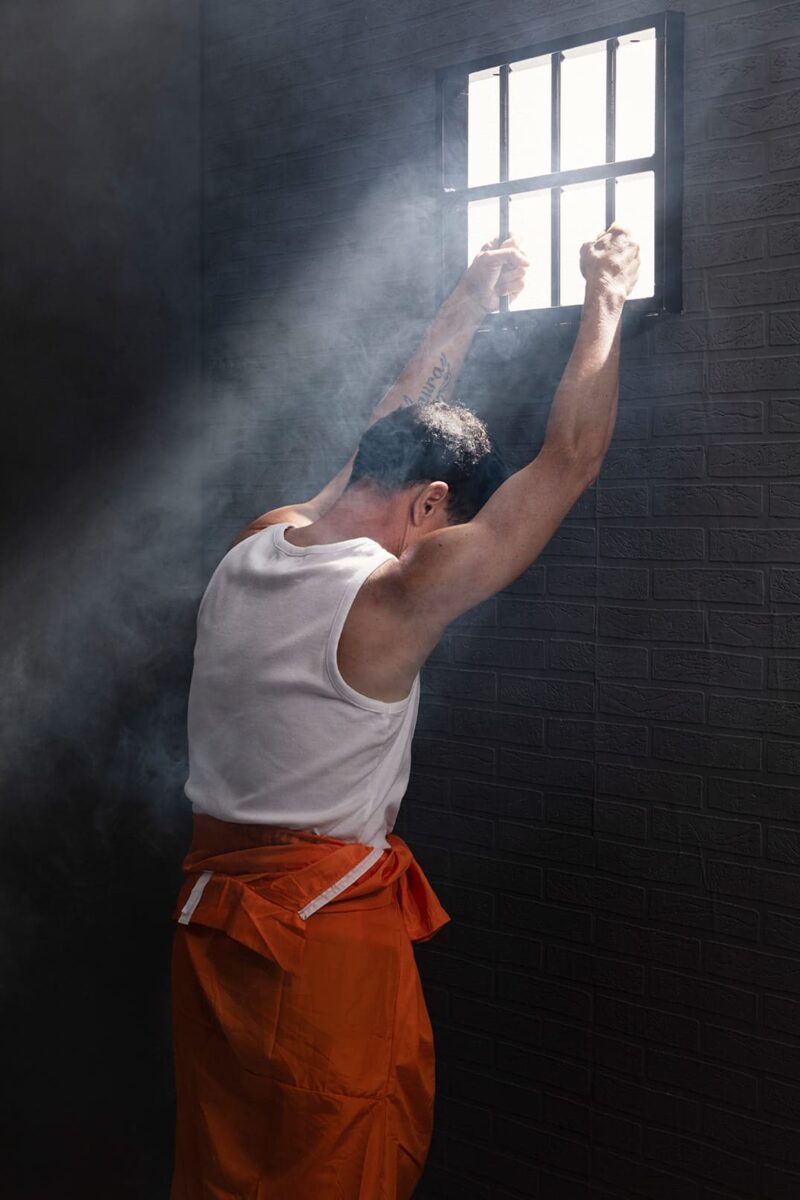
Guidelines for writing to a prisoner
From the moment of their death sentence, prisoners become the property of the state, which identifies them no longer by their name but by a registration number, thus erasing their individuality as men or women. After all, they are waiting to die… They must content themselves with waiting and enduring inhumane regulations that involve the daily violation of their privacy and, indeed, the obliteration of their identity.
Writing to one of these people means legitimizing their existence as men or women, as individuals and human beings, and offering them both a channel of communication with the outside world and the assertion of their right to identity. A single letter can transform their waiting into time to live.
The comfort of knowing that other people, belonging to distant cultures and societies, want to share a little of their thoughts and experiences, free from judgment and prejudice, is a great achievement for many, giving them the opportunity to breathe a little humanity.
The first letter is perhaps the most difficult to write, but you just need to be yourself, sincere, confused, uncertain, true.
You can write a simple short message introducing yourself and asking the prisoner if they would like to correspond with you, or you can write a letter telling them something about yourself and perhaps explaining your reasons for wanting to start this correspondence.
As a general rule, it is best not to ask the prisoner anything about the nature of the crime (discussing certain matters in letters could also be harmful from a legal point of view) and, in any case, it is better to let the prisoner decide whether or not to talk about it. However, you can ask them how long they have been on death row, whether they have adequate legal assistance, and whether they have the support of their family or friends.
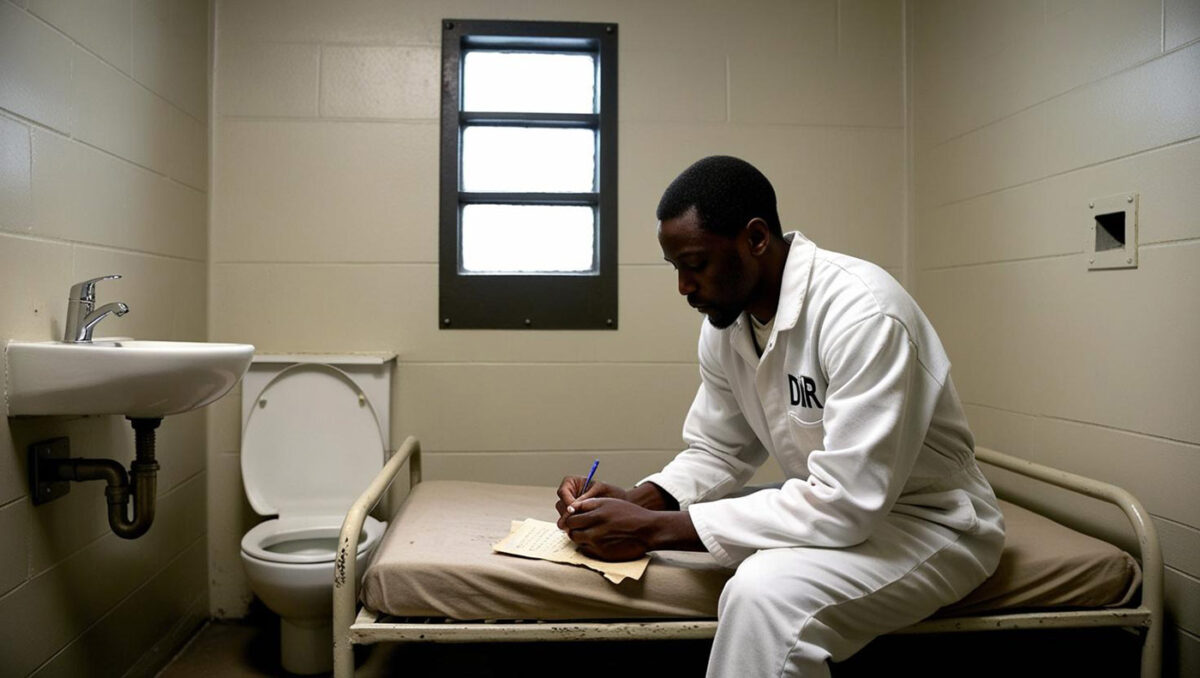
Chances are that the person you write to has been looking for a pen pal for a long time, but if this is not the case, it is good to be prepared for any kind of reaction, which can range from silence to an enthusiastic response. Some prisoners have little education and find it difficult to admit this, others cannot read or write in English, and others are simply not interested in corresponding.
So, unless in your case it is a prisoner who wanted to correspond with someone, it might be a good idea to tell him that you would like to pass your name on to someone else if he is not interested in corresponding with you (in any case, let us know what response you receive to your first letter and we will decide together how to proceed).
Don’t hesitate to talk about the good things that happen to you, to talk about your vacations, your travels, your family, because—contrary to what one might think—prisoners enjoy hearing about pleasant things, about everyday life, about a beautiful sunset, precisely because these are things they miss.
Through correspondence, a little normality and joy will enter your new friend’s life; he will be able to hear through your ears and see through your eyes, and you will become his window on the free world. What’s more, talking about normal things will make you seem more real: after all, what prisoners need most is to know that someone who really exists loves them.
Many prisoners receive no help from anyone; almost all of them have been abandoned by their families and rarely have any friends outside prison. They are often considered the dregs of society. It is therefore not surprising that, in many cases, simple correspondence quickly develops into a deep relationship.
This sometimes causes problems, especially for women, as male prisoners often fall in love with their pen pals and try to make the correspondence something very special and exclusive. If this happens to you, talk to someone who has had the same problem, or contact us for advice. This type of problem and others can arise because of the kind of life the prisoner is forced to live and the stress that comes with it, but you should also be aware that some prisoners suffer from mental disorders, others have had problems with drugs and/or alcohol, and others have been abused since childhood and their lives have been full of violence.
We would like to point out that we always try to select the people we match with pen pals, but—although rare—sometimes it can happen that someone, despite all our good intentions, behaves inappropriately. DON’T BE DISCOURAGED AND CONTACT US: WE WILL TELL YOU WHAT TO DO.
Your new friend may become demanding and correspondence may become difficult… some prisoners write once a day! Usually, however, they write once a week, so your commitment may be one letter a week or every two weeks. In any case, if you know from the outset that you will not be able to write very often, it is best to mention this immediately so that you do not disappoint your new friend’s expectations.
Some prisoners do not reply to the first letter they receive, and it is not unusual for them to stop writing suddenly or to write less frequently for a period of time. Of course, it is not easy to write to someone who does not reply or who does not get in touch for a while, but in some cases it is precisely those who do not want to or cannot write who are most in need. Your perseverance and patience may be put to the test.
So how does correspondence work? We can write to our friend by traditional mail or via an online platform.
Below, we will show you how to use the online platform, which we recommend because Securus serves over 3,400 prisons in the United States and is much faster and cheaper. However, if you would like more information on using traditional mail, please do not hesitate to contact us.
To check if Securus provides service to your correspondent’s prison, visit this link https://securustech.online/#/facilities-we-serve (the Polunsky Unit prison in Texas, where death row inmates are held, is served).
To use their service, simply register for free on the website.
After registering, to correspond with your friend, go to the eMessaging section, click on Launch, then Contacts and Add Contact.
Once you have found the inmate and added them to your list, return to the main page and in the eMessaging section you will see the words Purchase Stamps. These are the “stamps” you need to use in order to write.
A letter costs 1 stamp (about 60 euro cents), and each attachment, up to 5, costs 1 stamp each.
In addition, as we have written, inmates are often destitute, and if we can, we can send a “reply stamp” (at the bottom left of our letter) at the cost of one stamp.
When purchasing stamps, you must select the name of the prisoner and choose the desired quantity (5-10-25-50). Enter your details, payment details, and proceed.
On the STAMPS screen, you can also transfer (in the Transfer drop-down menu) the quantity you want and send it to your correspondent so that they can use it to write to you or anyone else.

Some warnings
Some prisoners ask for money.
You may be asked for a financial contribution to help their family members cover the travel expenses to visit their loved one in prison, especially if the prison is far from where the family lives and therefore the trip is expensive.
In some cases, large sums of money are also requested for legal defense (as we know, lawyers in the US are very expensive). Most prisoners are destitute and therefore need money for everyday things; however, it is important to bear in mind that the money does not always reach its intended destination, because not everyone is honest.
Unfortunately, there are prisoners who deceive their correspondents and others who simply think that their correspondents are richer than they really are. It is therefore advisable to exercise caution, especially when large sums of money are involved, in which case it would always be best to send financial aid directly to the lawyer or a representative of the defense fund. It is, however, entirely legitimate to make things clear with the prisoner regarding the sending of money and, if necessary, to set limits.
Executions
If the prisoner you are writing to is given an execution date, the experience can be traumatic, especially if your friendship has become deep.
It is good to know that some dates are more “serious” than others and that when a date is set, the execution will not always take place on that day.
You can contact us for detailed information on this matter, to find out what you can do to help your friend (as far as possible) by writing appeals to the authorities, to get advice, to receive moral support, and so that we can put you in touch with people who have had or are having the same experience as you.
In general
We would like to emphasize that corresponding with a death row inmate can be truly rewarding and give a lot in terms of human warmth and affection, but we do not hide the fact that this correspondence sometimes creates numerous problems.
It is not something to be taken lightly, especially since you are dealing with human beings who often have no one but us and for whom we become their only source of affection and support. This type of correspondence is not a game.
Backing out after you have started can be upsetting for the prisoner. Remember that your letter could change someone’s life and will certainly change yours, but if you are not sure about what you are about to do, think carefully before you start.
Don’t act too lightly. Think about what you are reading now, and if you decide it’s not for you, don’t write. You can always help in the fight against the death penalty in other ways if you believe in it, and thus help prisoners indirectly.
Please do not hesitate to contact us for further information at: corrispondenza@coalit.net